Justknock Professional Social Networking Platform Logo
    • 고급 검색
  • 손님
    • 로그인
    • 등록하다
    • 주간 모드
Phillip Bradford Cover Image
User Image
드래그하여 덮개 위치 변경
Phillip Bradford Profile Picture
Phillip Bradford
  • 타임라인
  • 여러 떼
  • 좋아요
  • 친구들
  • 사진
  • 비디오
  • 릴
Phillip Bradford profile picture
Phillip Bradford
1 와이 - 번역하다

From Clockchains to Blockchains — Teaching Consensus Mechanisms with Raspberry Pi
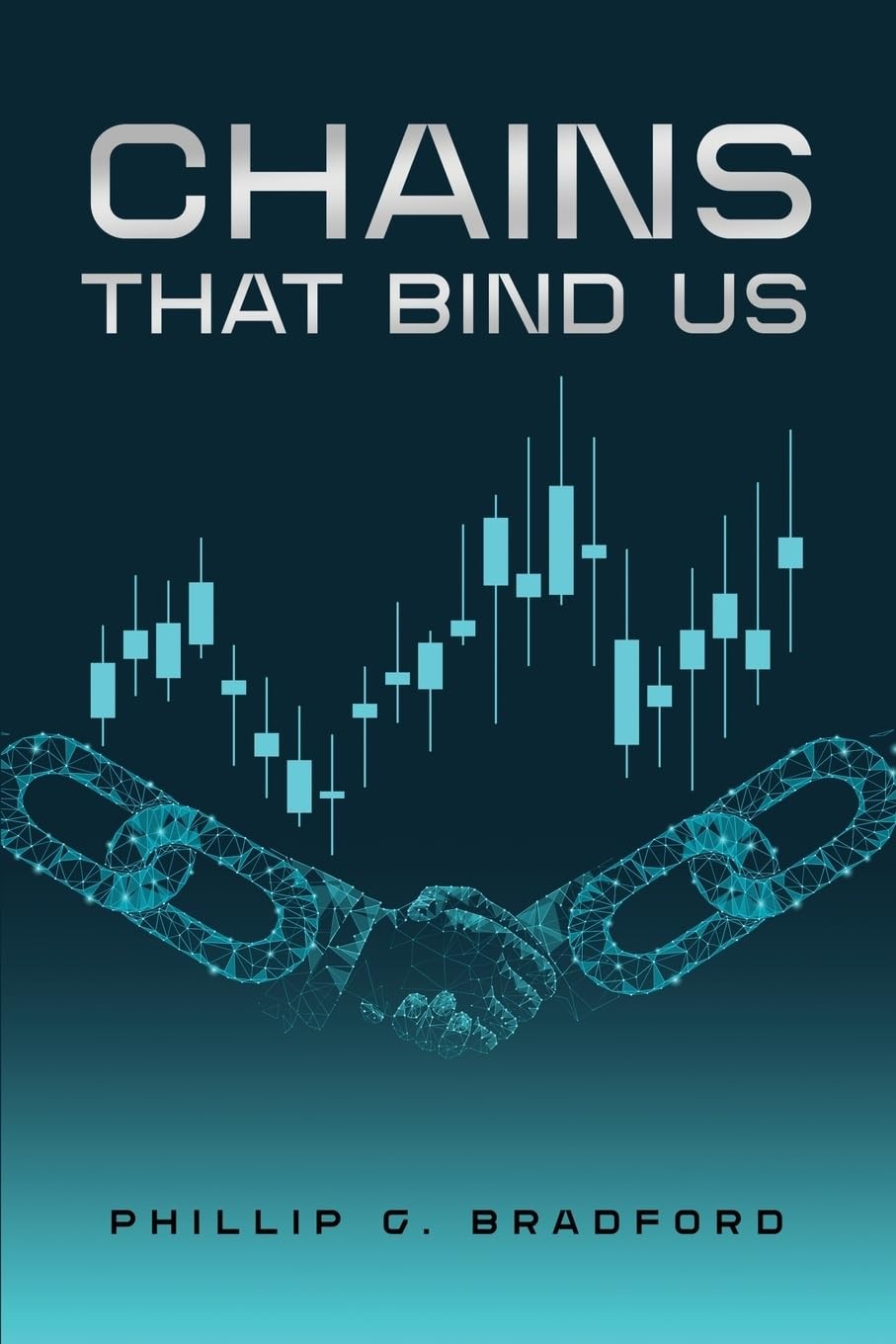
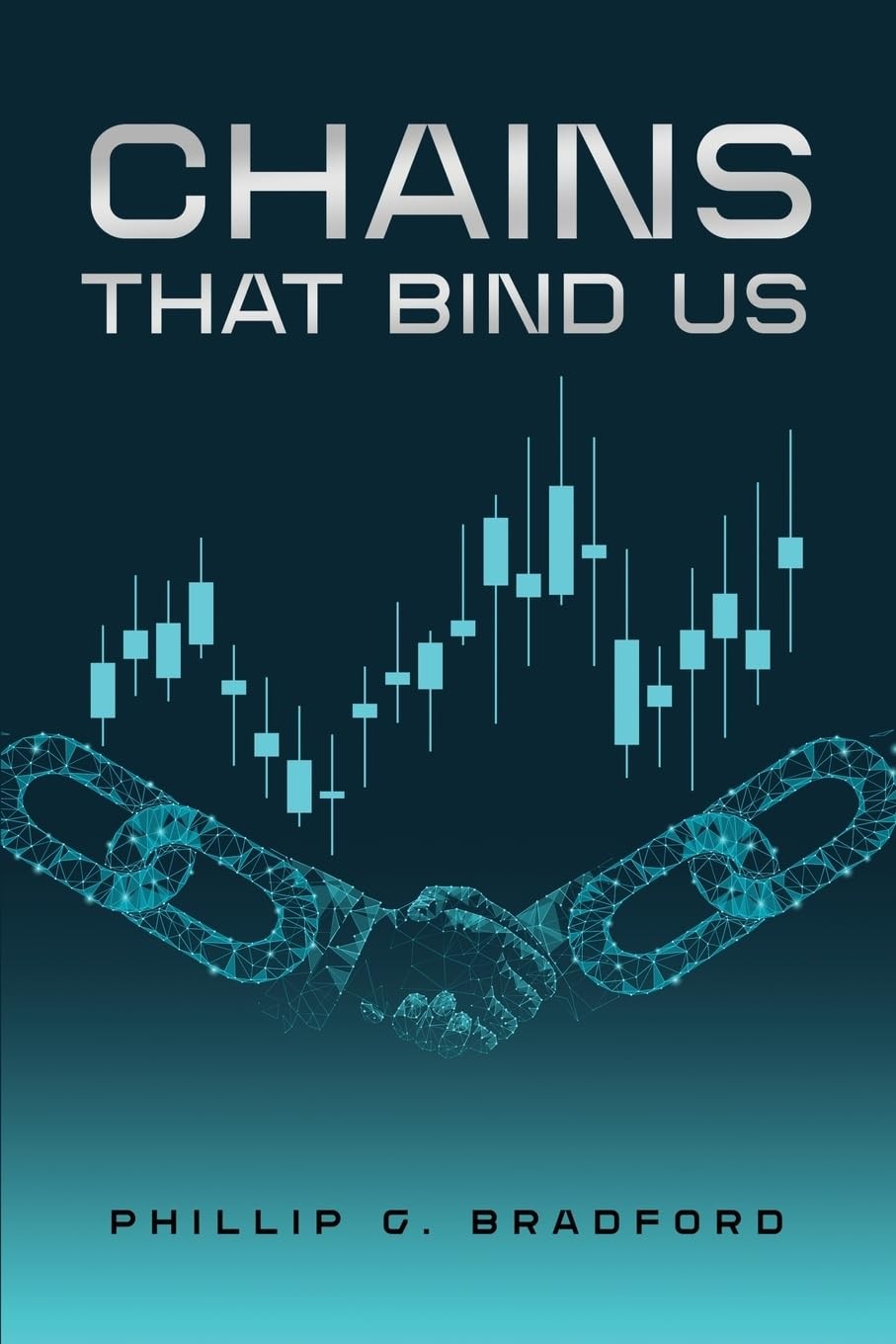
Phillip G. Bradford’s Chains That Bind Us presents an intriguing pedagogical innovation: the use of “Clockchains” as a simplified way to introduce distributed consensus mechanisms. While Clockchains are not blockchains, they mimic the sequential data structures and coordination challenges that underlie real distributed ledger technologies.
At the heart of Bradford’s approach is the use of physical or virtual Raspberry Pis to simulate these systems. He emphasizes that Clockchains are centralized and not secure—an important distinction—but they are still incredibly useful learning tools.
In Chapter 8, he explores master/slave Clockchains, which use SSH connections to coordinate block creation across multiple devices. Whether on physical Raspberry Pis or virtualized instances, these systems can simulate mining operations and emulate the distributed nature of blockchains. The goal isn’t production-readiness, but educational insight.
Clockchains allow students to grasp the importance of synchronization in distributed systems. Bradford defines synchronous algorithms as those where actions occur within specific time ranges—this becomes crucial in any consensus protocol, whether for Bitcoin or private enterprise blockchains. By experimenting with Clockchains, students directly observe how timing, latency, and coordination affect the integrity of distributed data.
The beauty of using Raspberry Pis—especially virtual ones—is that learners can build their own network topologies. They can start with one master node and a few slave nodes, run event loops, and simulate message passing via MQTT (Message Queue Telemetry Transport), a lightweight messaging protocol ideal for constrained devices. Bradford covers this progression, helping students move from basic block mining to more advanced coordination models.
For educators, this modularity allows lessons to scale with complexity. A basic course might use Clockchains to teach data consistency; an advanced one could layer on Byzantine fault tolerance, digital signatures, or gossip protocols. Because the Clockchain framework is open-source and modifiable, it becomes a playground for innovation.
Bradford’s method also mirrors real-world systems in miniature. In industry, developers routinely work with containerized blockchain nodes, cloud-based VMs, and testnets. By using Raspberry Pis (virtual or physical), students gain familiarity with SSH, scripting, VM management, and distributed debugging—skills that translate directly to blockchain development careers.
In essence, Clockchains provide the missing stepping stone between textbook learning and enterprise-level blockchain development. They embody a rare balance of simplicity and educational depth. With Chains That Bind Us, Bradford offers a roadmap for educators and learners alike to build understanding from the ground up—literally one block at a time.
Get Your Copy On Amazon Today: www.amazon.com/dp/1917007884
image
처럼
논평
공유하다
Phillip Bradford profile picture
Phillip Bradford
1 와이 - 번역하다

How Does Proof-of-Work Secure Blockchain Networks?
Blockchain technology has revolutionized financial transactions and digital ownership, but its security relies on a key concept: Proof-of-Work (PoW). As discussed in Chains That Bind Us by Phillip G. Bradford, PoW is a consensus mechanism that secures blockchain networks by ensuring that transactions are validated through computational effort. This article explores how PoW strengthens blockchain security and prevents fraud.
Understanding Proof-of-Work
In blockchain networks, PoW ensures that participants, known as miners, solve complex mathematical puzzles to validate transactions and add them to the blockchain. This process requires computational power, which acts as a deterrent against malicious actors attempting to manipulate the network.
Bradford explains that PoW works by computing a cryptographic hash for each new block, using a process known as mining. The hash must meet a specific difficulty target, making it computationally expensive to generate. This ensures that only miners with significant computing resources can validate transactions, reducing the risk of fraud.
Security Through Computational Effort
One of PoW’s key strengths is its reliance on probabilistic distributed consensus (p. 8). In a decentralized system, there is no central authority to verify transactions, so PoW ensures that only legitimate transactions are added to the blockchain. The computational cost of mining prevents double-spending, where a user tries to spend the same cryptocurrency twice (p. 25).
The difficulty adjustment mechanism is another critical security feature of PoW. As more miners join the network, the difficulty of solving the puzzle increases, maintaining a consistent block generation rate (p. 128). This prevents sudden spikes in mining activity from compromising the network’s stability.
Defending Against Attacks
PoW’s most significant advantage is its resistance to attacks. Bradford highlights two common threats:
1. 51% Attack: This occurs when a single miner or group controls more than 50% of the network’s hashing power, allowing them to rewrite blockchain history and double-spend. However, PoW makes such an attack computationally impractical because the cost of gaining majority control outweighs any potential rewards (p. 147).
2. Sybil Attack: In traditional systems, an attacker can create multiple fake identities to manipulate consensus. In PoW, an attacker would need an enormous amount of computational power to carry out such an attack, making it unfeasible (p. 114).
Limitations of Proof-of-Work
Despite its security advantages, PoW has some challenges:
• Energy Consumption: Mining requires vast amounts of electricity, leading to concerns about environmental sustainability (p. 122).
• Scalability Issues: Bitcoin’s PoW can only process a limited number of transactions per second, making it less efficient for large-scale applications (p. 125).
• Mining Centralization: While blockchain aims to be decentralized, mining pools can sometimes consolidate power, posing a risk to the network’s integrity (p. 13.
PoW remains one of the most secure consensus mechanisms, ensuring the integrity of blockchain networks through computational difficulty, decentralized validation, and probabilistic consensus. As Phillip G. Bradford discusses in Chains That Bind Us, its resistance to attacks like double-spending, Sybil attacks, and 51% attacks makes it a robust solution for securing cryptocurrencies like Bitcoin. However, the future may see alternative models, such as Proof-of-Stake (PoS), emerge to address scalability and energy efficiency concerns.

Get Your Copy Now And Be Inspired: www.amazon.com/dp/1917007884

image
처럼
논평
공유하다
Phillip Bradford profile picture
Phillip Bradford
2 년 - 번역하다 - Youtube

Chains That Bind Us || By Phillip G. Bradford || Book Trailer

처럼
논평
공유하다
Phillip Bradford profile picture
Phillip Bradford 프로필 사진을 바꿨다
2 년

image
처럼
논평
공유하다
 더 많은 게시물 로드
    정보
  • 4 게시물

  • 남성
  • 거주 United States
    앨범 
    (0)
    친구들 
    (0)
    좋아요 
    (53)
  • প্রবাসী কল্যাণ পরিষদ
    অভিযোগ বক্স
    Made in Bangladesh
    Faporbaz Fun
    Jamuna TV
    Protidiner Bangladesh
    Channel i News
    ATN News Live
    Bayanno TV
    여러 떼 
    (6)
  • ENOOMY Entrepreneur - Start, run and gro
    RANGCON Freelancer Marketplace
    Made in Bangladesh
    অভিযোগ বক্স
    প্রবাসী কল্যাণ পরিষদ
    Buy & Sell Bangladesh


© {날짜} {사이트 이름}

언어

  • 에 대한
  • 예배 규칙서
  • 블로그
  • 문의하기
  • 개발자
  • 더
    • 개인 정보 정책
    • 이용약관
    • 환불 요청
    • Child Safety Standards Policy
    • Child Safety Standards

친구 끊기

정말 친구를 끊으시겠습니까?

이 사용자 신고

중요한!

가족에서 이 구성원을 제거하시겠습니까?

당신은 찌르다 1733848940926778_79582

새 구성원이 가족 목록에 성공적으로 추가되었습니다!

아바타 자르기

avatar

프로필 사진 향상

사용 가능한 잔액

0

이미지


© {날짜} {사이트 이름}

  • 집
  • 에 대한
  • 문의하기
  • 개인 정보 정책
  • 이용약관
  • 환불 요청
  • 블로그
  • 개발자
  • 더
    • Child Safety Standards Policy
    • Child Safety Standards
  • 언어

© {날짜} {사이트 이름}

  • 집
  • 에 대한
  • 문의하기
  • 개인 정보 정책
  • 이용약관
  • 환불 요청
  • 블로그
  • 개발자
  • 더
    • Child Safety Standards Policy
    • Child Safety Standards
  • 언어

댓글이 성공적으로 보고되었습니다.

게시물이 타임라인에 성공적으로 추가되었습니다!

친구 한도인 5000명에 도달했습니다!

파일 크기 오류: 파일이 허용된 한도(954 MB)를 초과하여 업로드할 수 없습니다.

동영상을 처리 중입니다. 볼 준비가 되면 알려드리겠습니다.

파일을 업로드할 수 없음: 이 파일 형식은 지원되지 않습니다.

업로드한 이미지에서 일부 성인용 콘텐츠가 감지되어 업로드 프로세스를 거부했습니다.

그룹에서 게시물 공유

페이지에 공유

사용자에게 공유

게시물이 제출되었습니다. 곧 콘텐츠를 검토하겠습니다.

이미지, 동영상, 오디오 파일을 업로드하려면 프로 회원으로 업그레이드해야 합니다. 프로로 업그레이드

제안 수정

0%

계층 추가


이미지 선택
계층 삭제
이 계층을 삭제하시겠습니까?

콘텐츠와 게시물을 판매하려면 몇 가지 패키지를 만드는 것부터 시작하세요. 수익화

지갑으로 지불

주소 삭제

이 주소를 삭제하시겠습니까?

수익 창출 패키지 제거

이 패키지를 삭제하시겠습니까?

구독 취소

정말로 이 사용자의 구독을 취소하시겠습니까? 수익 창출 콘텐츠는 볼 수 없다는 점에 유의하세요.

수익 창출 패키지 제거

이 패키지를 삭제하시겠습니까?

결제 알림

항목을 구매하려고 합니다. 계속하시겠습니까?
환불 요청

언어

  • Arabic
  • Bengali
  • Chinese
  • Croatian
  • Danish
  • Dutch
  • English
  • Filipino
  • French
  • German
  • Hebrew
  • Hindi
  • Indonesian
  • Italian
  • Japanese
  • Korean
  • Persian
  • Portuguese
  • Russian
  • Spanish
  • Swedish
  • Turkish
  • Urdu
  • Vietnamese