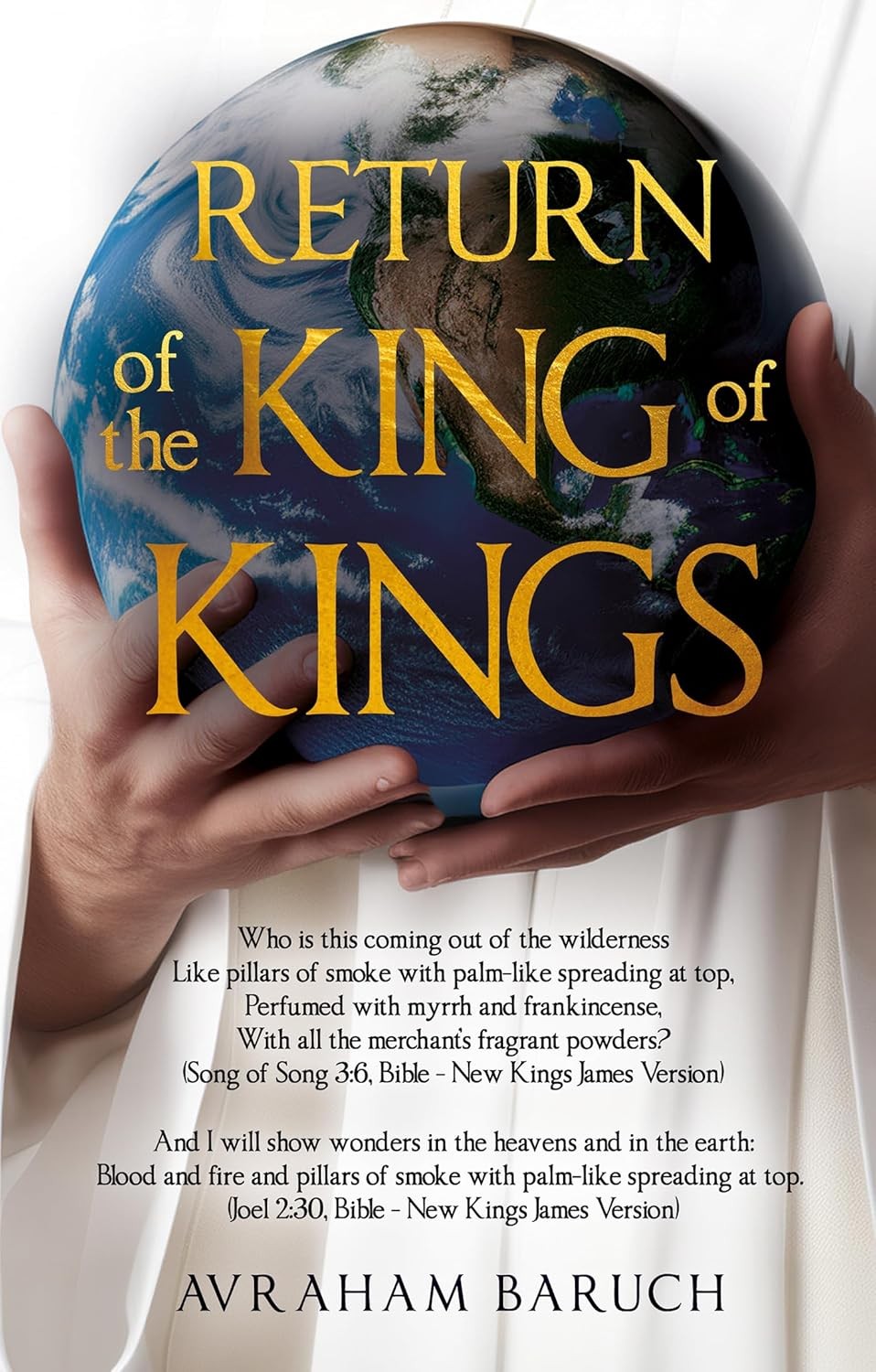
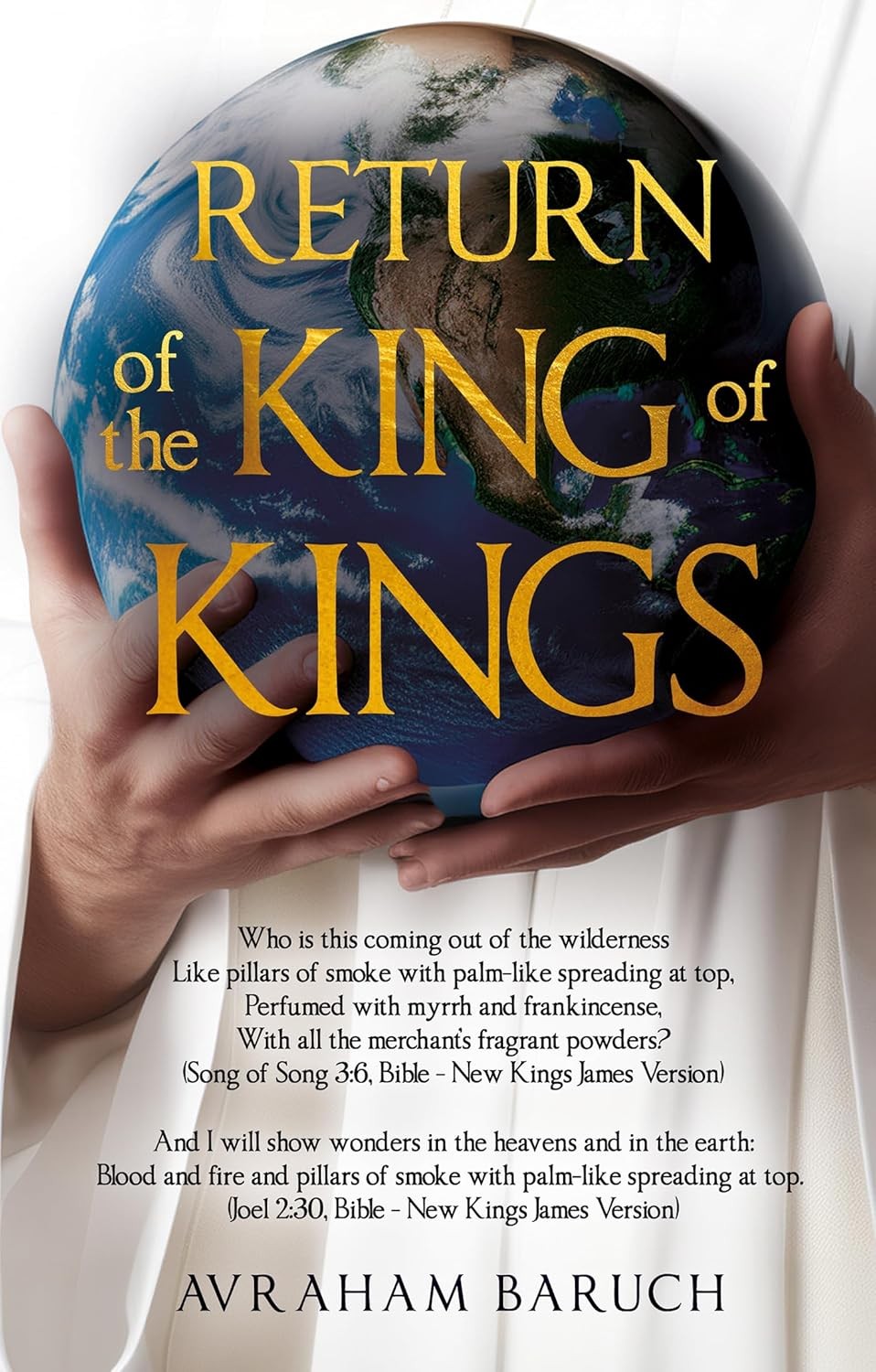
Avraham Baruch’s Vision of Iruslim and the Ceremony of Eternal Peace
In Return of the King of Kings, author Avraham Baruch has drawn readers into a breathtakingly vivid world where the echoes of biblical prophecy find voice in an awe-inspiring future.
At the heart of this Christian fiction is the holy city of Iruslim, a spiritual epicenter that embodies the fulfillment of divine promise. It is here, amid the serene beauty of rebirth and restoration, that the annual ceremony of sacrifice unfolds—a sacred tradition established in reverence for the Second Coming of the Messiah, Ishua Hameshea.
A Temple on a Hill, A Story Reaching the Heavens
Baruch’s depiction of Iruslim is not simply architectural—it is celestial. Nestled atop a high hill, the Temple of God rises like a beacon of peace and unity. It is both physical and metaphysical—a place where heaven touches earth. The altar, bursting with an offering of fruits, herbs, berries, and grains, symbolizes a world no longer marred by scarcity or sin. This isn’t a nostalgic dreamscape; it’s a vision of the Kingdom of God actualized, meticulously imagined through narrative and theological insight.
The altar, positioned directly under a domed ceiling with an open skylight, becomes the conduit through which prayers and gratitude ascend to the heavens—visibly. As bluish smoke spirals upward, it becomes more than a ritual—it becomes a broadcast of global spiritual harmony, literally visible to all, thanks to the live video transmission that spans the world. Through this lens, Baruch captures the universal nature of divine redemption: it’s communal, continuous, and cosmically visible.
The Ceremony of Sacrifice: A Poetic Renewal
Rather than dwelling in fear or judgment, the ceremony in Baruch’s fictional world is a celebration of deliverance—a poetic act of collective memory and gratitude. Thirty years after the Messiah’s return to the planet Istra, the people no longer live under the oppressive shadows of war, poverty, and corruption. These tragedies have become lessons told by elders to wide-eyed youth, much like ancient stories told around fires long ago. In this new world, the sacrifice is not for atonement but for thanksgiving, a radical shift from Old Testament customs that Baruch uses to underscore the completed work of redemption.
What makes this ceremony especially powerful is the cultural and racial mosaic presented. People of every color—yellow, white, black, brown, and red—gather, not merely as spectators but as celebrants of divine unity. Dressed in white robes, they symbolize not only purity but shared renewal—a striking visual of Revelation’s promise fulfilled.
Iruslim as Sacred Symbol and Literary Device
Iruslim isn’t just a renamed Jerusalem. It’s a reimagined Jerusalem—reborn in a spiritually cleansed world. Baruch intentionally distances the name just slightly to suggest transformation: a city rooted in the sacred yet elevated beyond its historical pains. Through Iruslim, the author crafts a powerful symbol of peace, prophecy, and permanence.
While reading this book, the finest aspect that readers might appreciate is the writing style of the author, which is fluid and reverent, blending theological depth with imaginative fiction.
A Modern Parable of Hope
At its core, this opening scene—and indeed the entire book—is a modern parable. Through Micho, Sashi, and the spiritual narrative arc of Istra, Baruch teaches that the path to redemption isn’t just personal—it’s universal. And it doesn’t begin with fear, but with love. The annual ceremony is a call to remember what God has done, to gather not in dread but in joyful reverence as the world moves from chaos to divine order.
All in all, “Return of the King of Kings” is Christian fiction elevated to art. The portrayal of the Iruslim ceremony is not only a beautiful literary device but also a theological celebration—a glimpse of what could be if faith and prophecy converge as one.
Paperback: www.amazon.co.uk/dp/1805144154