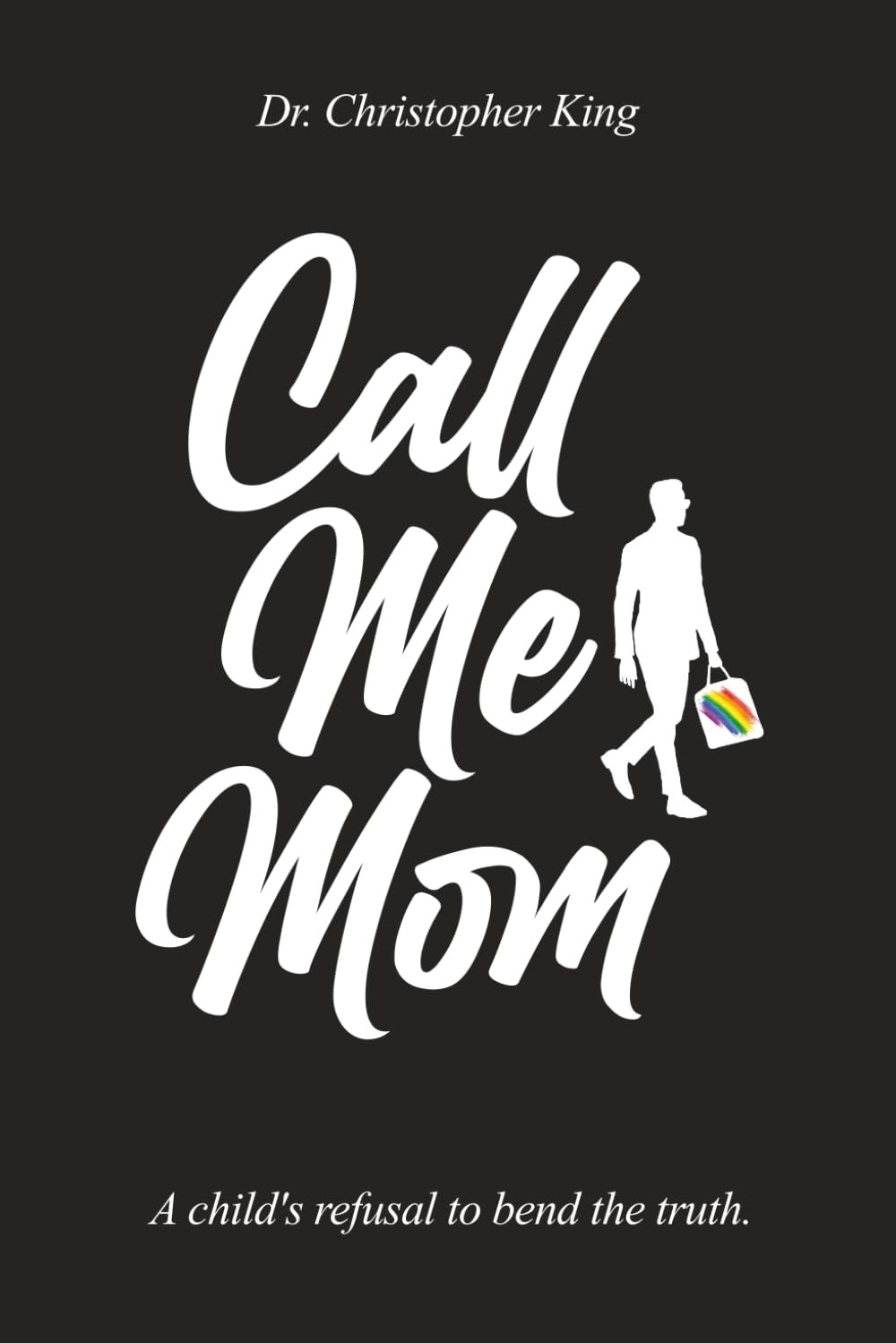
A Deep Dive into Freedom, Identity, and the American Constitution
In a world of shifting narratives, blurred lines, and loud voices demanding allegiance to particular ideologies, Dr. Christopher King’s Call Me Mom stands as a bold manifesto championing the foundational freedoms laid out in the U.S. Constitution.
At its core, the book confronts the cultural war over identity, expression, and truth, urging readers to return to a simple yet profound principle: freedom means embracing who you are, without demanding others rewrite their reality for yours.
Quoting the whimsical but wise Dr. Seuss, King writes:
“Be who you are and say what you feel because those who mind don’t matter and those who matter don’t mind.”
In this quote, often dismissed as a children's author’s musing, lies a powerful call to authenticity and a reminder that true freedom includes both self-expression and tolerance of others’ dissent.
A Nation Built on Liberty, Not Conformity
Dr. King celebrates the American Constitution not just as a legal document, but as the moral spine of a society that once believed people could disagree, debate, and diverge—without fear of cancellation, censorship, or coercion. The book’s central argument is clear: the moment society starts demanding uniformity of thought in the name of acceptance, it begins to unravel the very essence of liberty.
In Call Me Mom, King questions the societal trend of redefining biological realities and expecting universal affirmation under threat of social or legal punishment. “If society can convince you that a man is a woman and a woman is a man,” he writes, “we have far bigger problems to deal with.” This isn't a rejection of personal identity, but rather a critique of mandated acceptance and the erosion of choice.
The Freedom to Be—and the Freedom to Disagree
What King underscores is that freedom is a two-way street. Yes, you are free to live out your truth, wear your identity proudly, and pursue your happiness—but you do not have the right to force others to validate it. Doing so, he warns, turns liberty into tyranny and undermines the pluralism the Constitution was designed to protect.
He doesn’t argue against compassion or dialogue—far from it. In fact, Call Me Mom encourages respectful conversations around gender, identity, and values. What King resists is the authoritarian impulse to redefine truth, biology, and language through political or cultural pressure.
Speaking the Unspeakable in a Silenced Age
There’s a reason King suggests the media does not want you to read this book. It’s a narrative that pushes against mainstream messaging. It questions the shifting definitions of freedom and identity, and it demands that Americans ask themselves hard questions about what kind of nation we want to be.
Are we a nation that celebrates honest, sometimes uncomfortable dialogue? Or are we becoming a culture where only one form of expression is allowed, and all others are dismissed as hate?
The Seuss Principle: Say What You Feel
Ultimately, Call Me Mom is a defense not just of constitutional rights, but of the human right to truth, conscience, and individual belief. Dr. Seuss’s quote isn’t just clever—it’s the heartbeat of King’s message: if we abandon the right to speak our truth, no matter how unpopular, we abandon what makes us free.
So be who you are. Say what you feel. Let others do the same. That is the delicate balance of a truly free society. That is the legacy Dr. King hopes we’ll preserve.