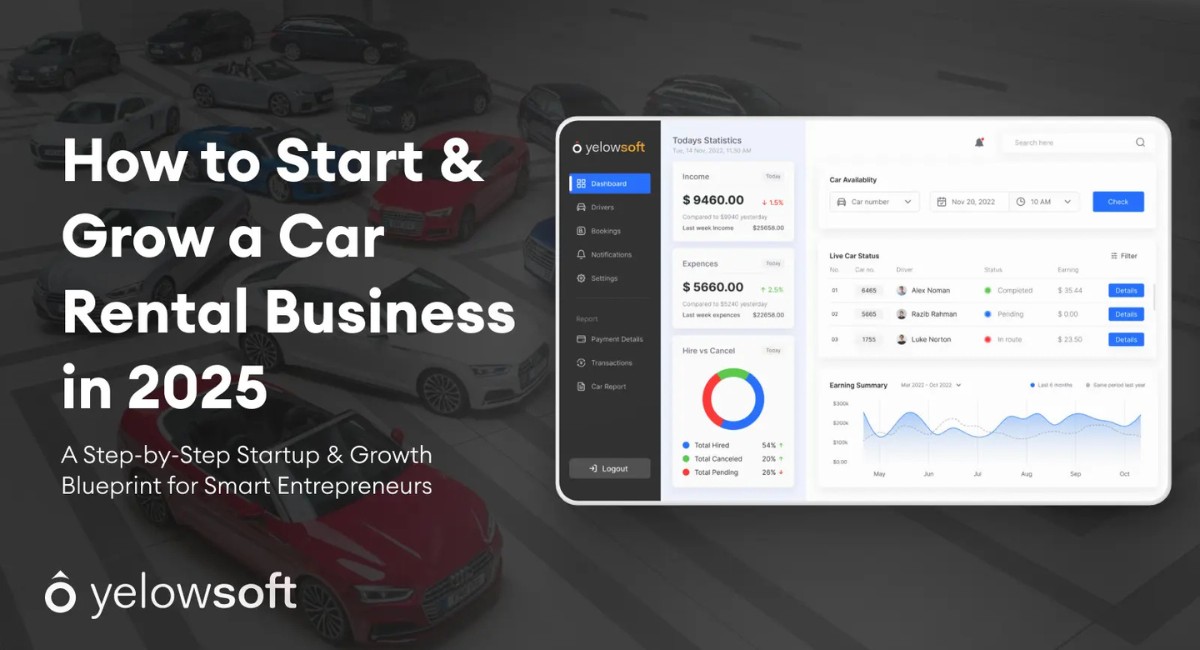
How To Start and Grow a Car Rental Business — A Roadmap for First‑Time Entrepreneurs
Launching a car‑rental venture may look daunting—there are vehicles to finance, licenses to obtain, and an ocean of well‑funded competitors. Yet thousands of independents thrive by carving out niches, delivering white‑glove service, and embracing smart tech from day one. This 900‑word micro‑blog gives you an end‑to‑end blueprint that’s practical, people‑centric, and battle‑tested by small‑fleet owners worldwide.
1. Begin With the “Why” and Your Niche
Before spreadsheets or suppliers, pinpoint why you want in and who you’ll serve. Traditional daily rentals? Premium SUVs for corporates? Long‑term leases for gig‑economy drivers? A crystal‑clear niche helps you:
Differentiate—competing on lowest price alone is a race to the bottom.
Focus marketing spend—ads and SEO revolve around a single customer persona, not “everyone who needs a car.”
Source the right fleet mix—you won’t overbuy sedans when your core demand is 7‑seaters.
Pro‑tip: Talk to potential customers first—rideshare drivers, hotel concierges, relocation agencies. Their pain points become your value propositions.
2. Validate Demand With Lean Market Research
Skip pricey consulting reports; do street‑level validation:
Keyword scouting: Use free tools (Google Trends, Ubersuggest) to gauge search volume for “car rental near [city]” + your niche.
Competitor test drives: Rent from three local rivals and map every friction point—from booking flow to vehicle handover.
Partnership probes: Ask hotels, tour operators, and HR managers how often they need short‑term vehicles and what frustrates them about current vendors.
If demand feels thin or saturated, pivot niches early—maybe focus on weekly EV rentals to tourists or subscription plans for remote workers.
3. Structure the Business Legally and Financially
Entity formation: Register as an LLC or Pvt. Ltd. to shield personal assets.
Licenses & insurance: At minimum, secure commercial motor transport permits, self‑drive rental permissions (varies by country/state), and both liability and comprehensive fleet insurance.
Capital stack: Blend personal equity, bank term loans, and possibly OEM leasing deals. Present a conservative breakeven analysis—assume 60 % fleet utilization, not 90 %.
Accounting backbone: Adopt cloud tools (QuickBooks, Zoho Books) from day one; vehicle depreciation and repair tracking will make or break your margins.
4. Build a Fleet That Matches Your Promise
Buy, lease, or franchise?
Buying offers full control but heavier upfront capital.
Leasing or subscription (from OEMs or fleet‑management firms) minimizes CapEx and keeps the lineup fresh.
Franchising under a global brand grants marketing muscle but slices into profit and autonomy.
Regardless, prioritize total cost of ownership (TCO): fuel economy, service intervals, resale value. A “cheap” purchase price often hides a money pit of maintenance.
5. Craft an Effortless Booking Experience
Your vehicles are tangible, but software is your storefront.
Website & mobile app: Clean UI, transparent pricing, live vehicle availability.
Central dispatch dashboard: Real‑time fleet tracking via GPS/OBD devices.
Digital KYC & e‑sign: Speedy onboarding beats paper contracts—use selfie verification and QR code vehicle pick‑ups.
Automated billing: Card‑on‑file or UPI/autopay to minimize cash handling.
Many SaaS vendors now bundle these features for <$200/month—cheaper than a single missed rental.
6. Deliver Service That Feels Human
Big chains treat customers like reservation numbers; you can win hearts (and five‑star reviews) by:
Meet‑and‑greet hand‑offs: Staff greet passengers curbside with a placard—no shuttle queues.
Welcome packs: Local SIM, route cheat‑sheet, phone charger. Costs peanuts, wows first‑time visitors.
24/7 WhatsApp support: Quick voice note beats IVR trees.
“No‑questions” grace period: Waive late fees for the first 30 minutes; goodwill > lost revenue.
7. Market Smartly, Not Expensively
Digital wins:
Local SEO: Optimize Google Business Profile; collect photo‑rich reviews.
Niche influencers: A travel v‑logger’s weekend test drive can outperform banner ads.
Remarketing ads: Catch cart‑abandoners with limited‑time discounts.
Offline boosters:
Hotel & hostel desks: Provide them QR coupon cards that auto‑credit commissions.
Corporate HR tie‑ups: Offer bundled airport transfers + daily commute rentals.
Community events: Sponsor eco‑rallies if you run hybrids/EVs—authentic exposure.
8. Monitor KPIs Relentlessly
Weekly dashboards should include:
KPI
Healthy Benchmark
Fleet Utilization
≥ 75 %
Revenue per Available Car Day (RevPACD)
Growing ≥ 2 % MoM
Maintenance Cost per km
↓ trending
Customer NPS
50+
Spot a dip early; adapt pricing or rotate vehicles to high‑performing locations.
9. Scale and Diversify
Once cash flow stabilizes:
Add specialty segments: Camper‑vans, classic cars for weddings, or long‑term corporate leases.
Geographic clustering: Open satellite lots within a 50‑km radius—easier fleet shuttling.
Subscription models: “Pay monthly, swap anytime” plans lock in recurring revenue.
Ancillary upsells: GPS devices, child seats, or in‑car Wi‑Fi—all high‑margin add‑ons.
Beware of “empire fever.” Double down only after unit economics in your core city stay solid for three consecutive quarters.
10. Future‑Proof With Sustainability
Regulators and guests are pushing green:
Trial EVs: Even a 10 % electric fleet cuts fuel volatility and garners eco‑conscious customers.
Offset programs: Partner with reforestation NGOs; let renters add ₹100 to neutralize trip emissions.
Data‑driven eco‑driving tips: Send drivers a post‑trip scorecard showing fuel saved by smoother acceleration.
Sustainability is no longer CSR fluff—it’s a booking filter for millennials and corporate RFPs alike.
Final Gear‑Shift
Starting a car‑rental business is less about shiny cars and more about solving mobility headaches with empathy and efficiency. Nail the basics—niche clarity, tight TCO management, frictionless tech—and layer on human‑centric touches that giants overlook. The road ahead has potholes, but disciplined operators who listen to customers, iterate fast, and keep their fleets healthy can steer their venture from a two‑car side hustle to a multi‑city powerhouse.
Ready to shift from planning to ignition? Your first booking could be just one test‑market conversation away. Keep the engine running—and don’t forget to enjoy the ride.